A.Eon: Projects
Site – consistent existing use permits in place
- A.Eon will develop project sites in Victoria, then expand across Australia.
- Sites are selected with existing operational and land use permits to minimize additional time to finalise permits required to operate A.Eon’s plant and equipment.
- In Victoria, A.Eon’s first project we are looking at the site adjacent to the former Monsanto Chemical Plant in Brooklyn, as this site was a former municipal tip site.
- The site has a number of benefits including:
- 15,000 m2, site with existing land use zoning.
- Provision of all buildings, hardstand and services.
- A number of large energy customers adjacent to the site.
- Plant of 50tpd to 100tpd capacity operating for 330 days per year.
Waste Plastic & End of life Tyres – long-term supply agreements
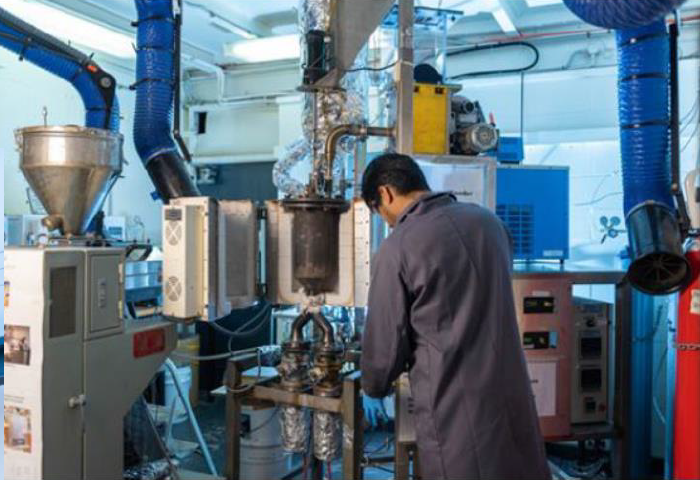
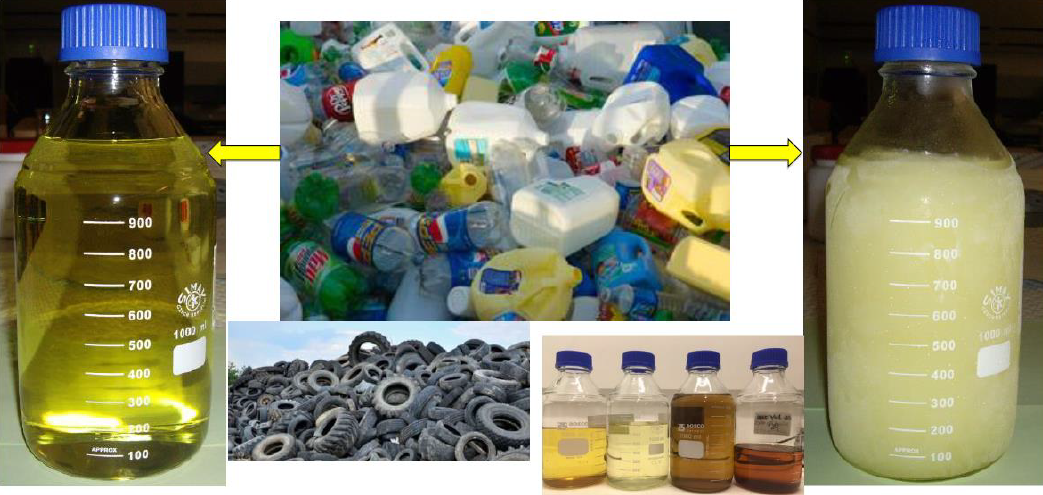
- A.Eon has been working with existing waste management companies to source end-of-use tyres & residual plastic from municipal waste collection. Waste is sorted into a wide range of products and recycled to 3rd party processors. A.Eon’s process then takes the waste products for processing to oil, gas, and char ( Carbon Black).
Recycling waste plastic and transforming waste materials back into a synthetic oil.
- Recycling waste plastic and waste tyres to commercialise closed loop plastic to plastic facility and waste rubber back to saleable by-products.
-
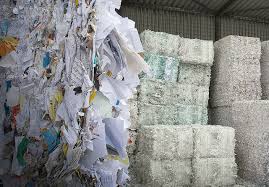
Municipal recycling facilities (MRFs) undertake collection and secondary sorting of plastic waste for recycling and reuse.
-
A.Eon Power is based on a core Pyrolysis process. Pyrolysis is a thermal decomposition process that occurs in the absence of oxygen.
-
There are 3 process outputs; gas, oil and solids.
-
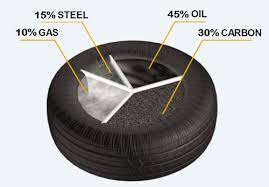
The Co-Pyrolysis plant operates continuously to produce ~20% gas, ~70% oil and ~10% char (Carbon Black).
PROCESSING A MIX OF WASTE TYRES AND WASTE PLASTIC INTO A SYNTHETIC OIL:
The technology uses the co-pyrolysis of a polyolefin (waste plastic) and rubber-containing material (waste tyres) to create a higher-grade synthetic oil for the manufacturing industry.
The creation of a valuable resource from waste tyres, has recently gained much attention to drive the circular economy of waste materials. The co-pyrolysis process involves the breakdown and rearrangement of chemical constituents of the waste rubber material at high temperatures, within an inert atmosphere. Hence, waste materials such as rubber (waste tyres) can be converted back into raw hydrocarbons (Synthetic Oil).
Co-Pyrolysis of waste rubber materials (tyres) generally produces oil, gas, and char. The oil and gas products are mainly composed of compounds such as benzene, toluene, xylene, styrene, etc. which have numerous applications as raw materials in many industrial manufacturing applications.
The culmination of these endeavors is our comprehensive business plan, which centers around the conversion of municipal waste plastic and waste tyres into a synthetic oil.

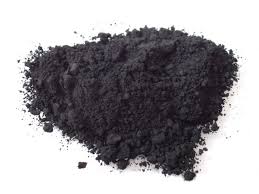
Carbon black is mainly used to strengthen rubber in tires, but can also act as a pigment, UV stabilizer, and conductive or insulating agent in a variety of rubber, plastic, ink and coating applications.
Carbon black (CB) is the product of incomplete combustion or thermal decomposition of heavy petroleum products. CB is a common conductive additive in Li-ion batteries because of its small particle size, large specific surface area (SSA), and high electrical conductivity.
- Carbon black is a fine black powder that is used as a reinforcing agent, pigment, and UV stabilizer.
- In the steel industry, carbon black is used to improve the mechanical properties of reaction-bonded SiC ceramics.
- Reaction-bonded SiC is a ceramic that is used to make high-temperature ceramics and refractories.
- Adding carbon black to reaction-bonded SiC improves its mechanical properties, such as bending strength and fracture toughness.
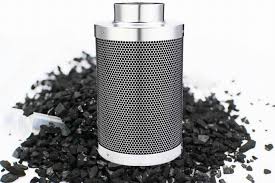
- Carbon black filter solutions remove contaminants from carbon black feedstock to ensure a consistent product.